
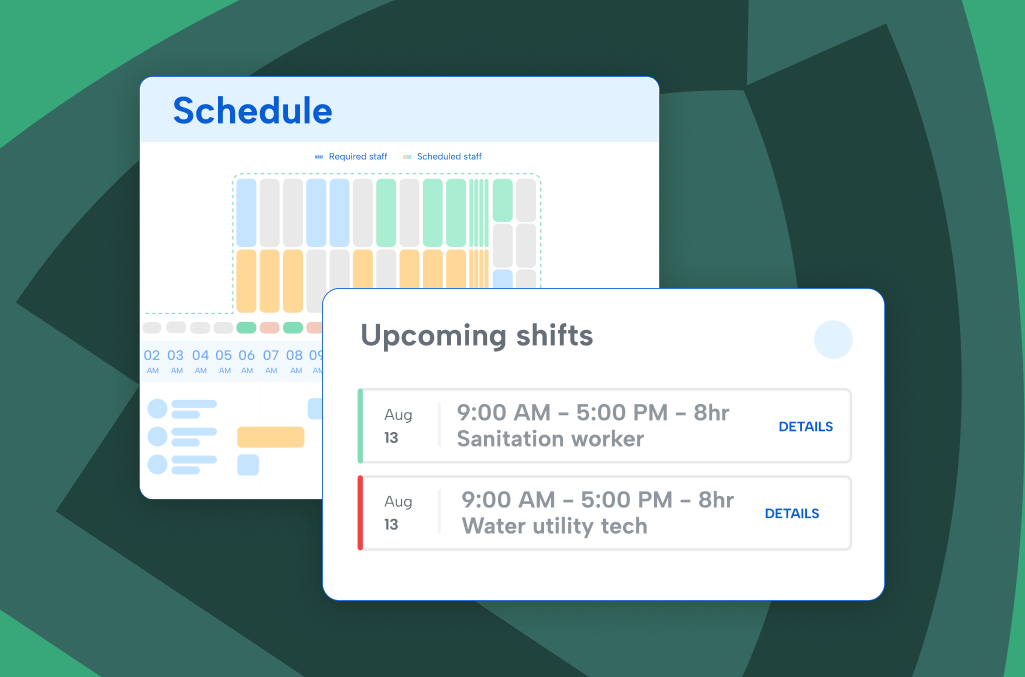
Efficient workforce scheduling is critical for modern organizations, requiring a balance of dynamic demands, transparent communication, and flexibility to drive business value and foster employee loyalty. Yet, many organizations still rely on outdated, manual scheduling systems that fail to meet these needs, resulting in significant hidden costs.
To stay competitive, organizations must understand the full scheduling software benefits available to them. That starts with understanding the operational impact of smart, digital tools like employee scheduling software.
Why employee scheduling matters
Did you know that 80% of employees’ timesheets in the U.S. contain errors due to poor scheduling practices? Inefficient scheduling not only wastes time but also impacts productivity, employee morale, and even compliance with labor laws. For organizations of all sizes, managing employee schedules manually can lead to errors, increased costs, and dissatisfied staff.
As organizations grow and the workforce becomes more diverse, scheduling complexities increase. Factors like varying shift preferences, skill levels, compliance regulations, and fluctuating demand make workforce management a critical challenge. Failing to address these issues can result in financial losses, high turnover rates, and operational inefficiencies. This is why organizations today must adopt smart employee scheduling solutions to stay competitive.
The challenges of manual scheduling
Managing employee work schedules manually may seem straightforward, but it often leads to mistakes that disrupt operations and frustrate both managers and staff. Without an automated solution, organizations face a range of issues that can impact productivity, compliance, and employee satisfaction. Additionally, manual scheduling lacks the flexibility and real-time updates needed in today’s fast-paced work environments. Here are four major challenges of manual scheduling:
- Inefficient and time consuming
- Scheduling conflicts and errors
- Compliance risks
- Impact on employee satisfaction
Addressing these challenges requires a more efficient approach to workforce scheduling — one that minimizes errors, saves time, and keeps your employees and your organization running smoothly.
1. Inefficient and time consuming
Traditional scheduling methods, such as spreadsheets or pen-and-paper approaches, are notoriously inefficient and time-consuming, especially for organizations with large teams or complex shift requirements. Managers spend hours every week juggling shift allocations, adjusting schedules, and resolving conflicts. This manual workload diverts attention from more strategic tasks and can lead to costly mistakes. It’s one of the clearest examples of how the benefits of employee scheduling software far outweigh traditional processes.
2. Scheduling conflicts and errors
Without a centralized system, double bookings, understaffing, and last-minute schedule changes are common. These issues disrupt operations, frustrate employees, and may lead to customer service issues. In retail and hospitality, improperly scheduled shifts can mean long lines, overwhelmed employees, and lost revenue. In healthcare, employee scheduling mistakes can lead to critical understaffing that affects patient care and safety.
3. Compliance risks
Maintaining compliance with overtime regulations, labor laws, and industry-specific mandates can be daunting. Mistakes in scheduling can result in fines, lawsuits, or reputational damage. Many industries must adhere to strict labor law compliance, including maximum working hours, mandatory breaks, and overtime restrictions. Manually tracking these regulations increases the risk of non-compliance, which can lead to severe legal consequences.
4. Impact on employee satisfaction
Frequent last-minute changes, inconsistent shifts, and a lack of transparency can create frustration among your employees. Unhappy workers are more likely to quit, leading to increased turnover and hiring costs. Employees value predictable schedules that let them balance work with personal responsibilities. Poor scheduling can lead your team to burnout, disengagement, and a negative workplace culture. These are some of the hidden consequences of ignoring the scheduling software benefits now available to modern employers.
The role of employee scheduling software
Employee scheduling software has emerged as a game-changer in the operations of modern organizations. These tools help employers efficiently create, modify, and share schedules with employees, often integrating with time-tracking and leave management solutions. With employee scheduling solutions, organizations can automate the scheduling process so shifts are allocated efficiently, conflicts stay minimal, and communication stays clear.
And by leveraging automated scheduling, companies can eliminate the inefficiencies of manual scheduling and improve workforce management overall. These are just a few of the core scheduling software benefits modern teams rely on today.
Why employee scheduling software is a strategic investment
Antiquated employee scheduling systems harm productivity, as they don’t support the dynamic nature of today’s real-time work environment or integrate with critical organization aspects, such as payroll, labor costs, onboarding, or training.
A modern, efficient workforce demands more than outdated scheduling practices. Investing in employee scheduling software addresses core inefficiencies, enabling organizations to reduce costs, boost employee satisfaction, and maintain operational excellence. For industries like retail, healthcare, and manufacturing, where staffing needs are dynamic, employee scheduling software provides the flexibility and reliability necessary to maintain a competitive edge.
Flexible, cloud-based employee scheduling aligns staffing with projected demand, leading to full shift coverage and eliminating overstaffing costs. In addition, features like automated conflict detection help you know the right personnel are slotted in according to their skill sets, compliance parameters, and availability.
For organizations running multiple locations, that same automation extends across sites — surfacing available staff at nearby stores or departments so managers can fill coverage gaps without over-relying on overtime.
And by integrating your employee scheduling software with your payroll management, HR systems, and other essential organization tools, you can streamline administrative tasks, reduce manual data entry, and maintain consistency across platforms.
Benefits of employee scheduling software
Tackling the challenges of ineffective employee scheduling calls for solutions that streamline processes and enhance productivity for your organization. The five benefits below are where employee scheduling software delivers the most measurable value today:
| Benefit | What it delivers |
| Automation and time savings | Generates optimized schedules in a few clicks, factoring in availability, skills, and labor demand, so managers spend less time on routine scheduling tasks. |
| Enhanced communication | Keeps employees updated on shift assignments and changes in real time through mobile apps and notifications. |
| Improved accuracy | Uses AI and predictive analytics to prevent double bookings, maintain adequate shift coverage, and support accurate payroll. |
| Employee empowerment | Lets employees swap shifts, request time off, and update availability through self-service tools, without a lengthy approval chain. |
| Data-driven insights | Uses analytics to forecast labor needs, spot inefficiencies, and guide smarter workforce planning. |
Two features tie these benefits together for many organizations: AI and predictive analytics that flag conflicts before they happen, and integration with payroll that helps avoid costly payroll errors — both of which also support stronger scheduling and retention outcomes.
The business impact of employee scheduling software
Implementing employee scheduling software can have a profound impact on organizational operations, boosting efficiency, productivity, and overall profitability. By automating time-consuming tasks like shift planning, tracking employee availability, and managing time-off requests, organizations can save countless hours that managers would otherwise spend on manual scheduling. This allows them to focus on higher-value activities, such as strategic planning and team development.
Additionally, employee scheduling software helps reduce scheduling conflicts, so shifts are covered without overstaffing or understaffing, which can directly impact customer satisfaction and operational costs.
Moreover, employee scheduling solutions foster better communication and transparency by providing employees with instant access to their schedules and enabling them to swap shifts or request changes easily. Not only does this help enhance employee morale and engagement, but it also helps reduce turnover rates.
For organizations in industries with strict labor laws, scheduling software helps maintain compliance by flagging potential violations, like excessive overtime or missed rest breaks, before they become costly fines or legal issues. Overall, investing in these tools doesn’t just improve operations — it delivers measurable ROI through the real-world benefits of employee scheduling software.
Frequently asked questions about employee scheduling software
What is employee scheduling software?
Employee scheduling software is a digital solution that helps managers build, adjust, and share employee schedules based on availability, skills, and labor demand, often connecting directly with time tracking and payroll.
What are the main benefits of employee scheduling software?
The clearest benefits are automation and time savings, improved schedule accuracy, better employee communication, and lower compliance risk, all of which reduce the manual workload on managers while helping control labor costs.
Can employee scheduling software help with compliance?
Yes. Most solutions flag potential violations, like missed rest breaks or excessive overtime, before a schedule is published, which helps organizations maintain compliance with labor laws instead of catching problems after the fact.
Is employee scheduling software useful for organizations with multiple locations?
Yes. Multi-location organizations can use scheduling software to see staff availability across sites, move employees between locations to cover gaps, and apply consistent labor rules everywhere they operate.
The competitive advantage of employee scheduling software
In an era where efficiency and employee satisfaction are key to organizational success, employee scheduling software offers a critical edge. By automating scheduling, improving communication, and reducing costs, these tools help organizations streamline operations and foster a happier, more productive workforce. Organizations that invest in the right solution can expect increased efficiency, measurable cost savings, and higher employee retention.
TCP Software’s employee scheduling and time and attendance solutions have the flexibility and scalability to suit your business and your employees, now and as you grow.
From TimeClock Plus that automates even the most complex payroll calculations and leave management requests, to Humanity Schedule for dynamic employee scheduling that saves you time and money, we have everything you need to meet the needs of your organization, no matter how unique. Plus, with Aladtec, we offer 24/7 public safety scheduling solutions for your hometown heroes.
Ready to learn how TCP Software takes the pain out of employee scheduling and time tracking? Speak with an expert today.




 Link copied!


