
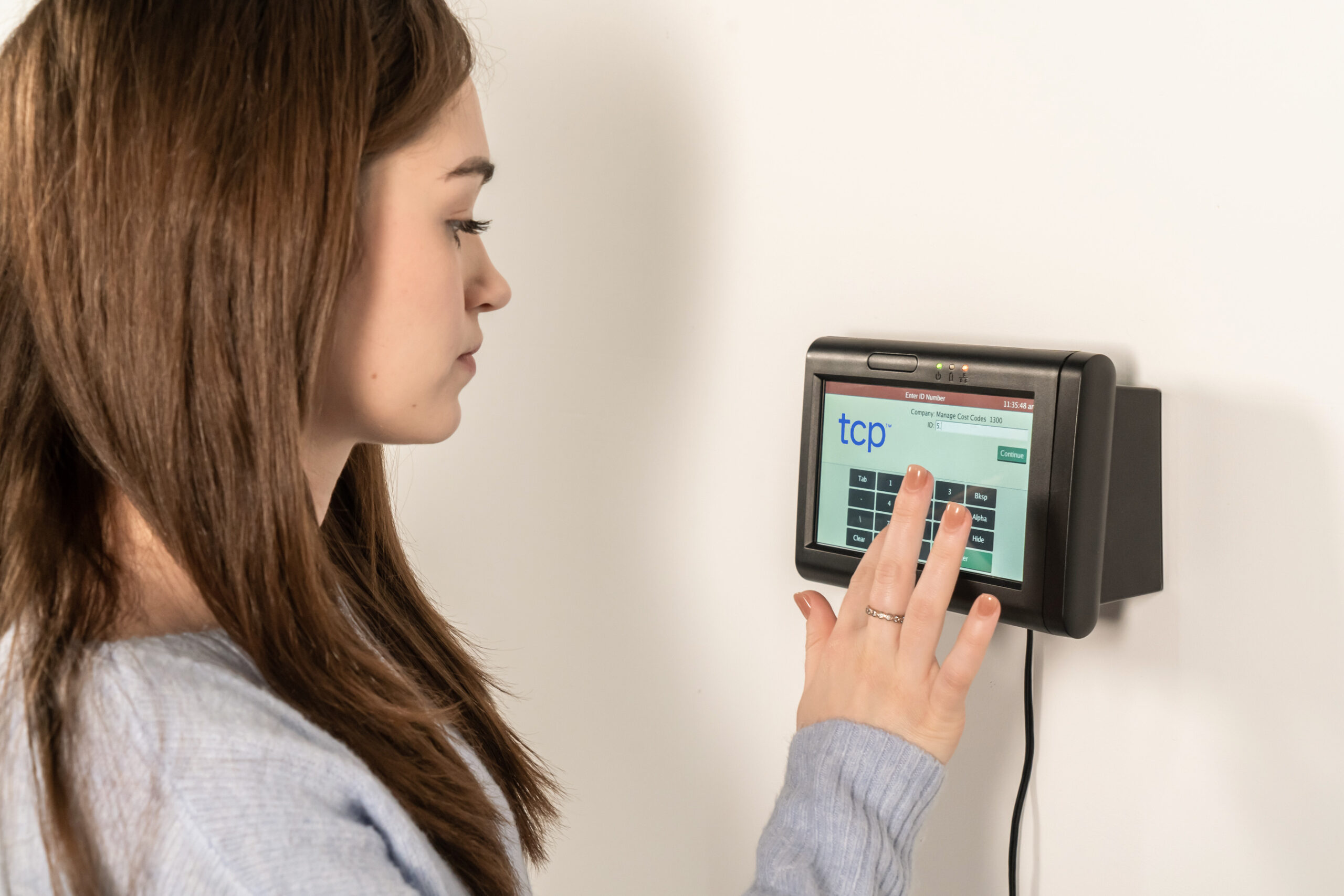
In a world of “or,” we believe in “and.” Digital tools have transformed how you manage your workforce. But when it comes to tracking employee time, it might be worth doing what’s suddenly cool again and “going analog.” We mean physical time clocks.
Let’s be clear:
- Web-based timesheets, mobile apps, and browser punch-ins have their place
- So do dedicated hardware and physical time clocks
The question isn’t which technology is newer or better. It’s which solution is right for your workforce. Digital solutions are great “and” so are physical ones.
Here’s why many organizations — especially those managing frontline, hourly, or field-based teams — still rely on physical time clocks and biometric time clock hardware to run tight, compliant operations.
Where physical time clocks are needed in the workforce
Physical time clocks require presence. While digital-first solutions offer plenty of convenience and flexibility, the physical intervention of hardware prevents several specific time tracking problems.
Buddy punching bleeds margins
Buddy punching — when one employee clocks in for another — is a widespread and expensive form of time theft i.e. a major business problem. According to the American Payroll Association (APA), 75% of U.S. businesses are affected, resulting in an estimated $373 million per year in fraudulent payroll costs.
The case for physical time clocks
Physical time clocks and biometric time clock systems help eliminate the risks of buddy punching and time theft.
Biometric clocks verify identity through a fingerprint or palm scan, while proximity badge readers require the employee to physically be present with their assigned credential. You can’t punch in from the parking lot, from home, or on behalf of a coworker.
Not every workforce lives on a screen
Your organization probably doesn’t run on a single timekeeping method, and it shouldn’t have to.
Mobile and web-based clocks work well for employees who carry smartphones with reliable data connections, but for many frontline workers, that’s not the reality:
- Manufacturing, warehousing, and construction teams often work in environments where personal phones are prohibited, or connectivity is spotty.
- Government, healthcare, and other data-sensitive industries may ban personal devices entirely as a deliberate security measure.
For those workers, mobile timekeeping is a non-starter.
The case for physical time clocks
Physical time clocks offer consistency and clear options to restricted industries: they’re always on, always available, and don’t depend on network strength, battery life, or app updates. When you’re managing hundreds of punches across multiple shifts every day, little inconsistencies with screen-based devices add up.
Ultimately, the best time and attendance tracking setups don’t force a choice. They give organizations the flexibility to deploy the right capture method for each part of their workforce — mobile where it works, physical where it’s needed.
Compliance requires precision
At the federal, state, and local level, wage and hour laws are strict. From overtime thresholds to employee break requirements and predictive scheduling laws, you’re working with a slim margin for error but a massive delta for the cost of mistakes.
The case for physical time clocks
Physical time clocks support compliance in a way that digital time clocks can’t by creating a clean, tamper-free record of when employees start and stop work.
Manual timesheets, often the hedge for a full time clock system, introduce even more risk of data entry errors, rounding disputes, and time theft, each harder to detect and harder to defend against in their unique way.
If you want to remove that ambiguity, you need the clean, accurate audit trail only a physical time clock can provide.
How physical time clocks keep things simple and accessible for everyone
Physical time clocks, above every other bleeding-edge capability and fancy marketing positioning, accomplish one simple task: removing decisions from the process.
Scalability of time clock processes
Employees walk up, punch in, and get to work. No prompts, no logins, no reminders to submit time before the pay period closes, which scales easier. So the more employees punching in across multiple shifts, roles, departments, or locations, the more valuable an automatic record becomes.
Accessibility for all
It’s easy to talk about improving your systems when everyone comes with the same context and capabilities. But what happens when that’s not the case?
For workers with limited English proficiency, lower digital literacy, or in high-turnover environments, a physical clock removes a real barrier. There’s no app to download, no password to remember, and no tutorial required — a badge tap or finger scan and they’re in.
That simplicity pays off especially when onboarding dozens of new hires at once, common in retail, hospitality, manufacturing, and construction.
Offline resilience and power reliability
Physical time clocks shouldn’t go down when your network does.
Modern employee time clock hardware operates with onboard storage and middleware backup, so punches are captured locally and synced when connectivity is restored. For manufacturing plants, distribution centers, and job sites where network outages are a real operational risk, that resilience can’t be overstated as a necessity.
Again, mobile devices have their conveniences. On the flipside, dedicated time clocks don’t run out of battery, need OS updates mid-shift, or require an IT ticket when something stops working. They’re built for one job and do it reliably, shift after shift.
How to pick the right physical time clock solution based on your workforce
No single time collection method works best for every organization.
The industries below share a common profile: large hourly workforces, strict compliance requirements, and operational environments where digital-only time collection falls short.
| Industry | Why physical time clocks fit | Common time clock type |
| Manufacturing & Warehousing | High employee counts, restricted phone use on the floor, complex shift structures, and job costing requirements make hardware the most reliable capture method. | Biometric, Proximity Badge |
| Healthcare | Around-the-clock operations, credential-sensitive environments, and strict wage and hour compliance demand tamper-resistant records and no reliance on personal devices. | Biometric, Proximity Badge |
| Higher Education | Large populations of hourly student workers, facilities staff, and part-time employees across distributed campuses need a standardized, low-friction punch process. | PIN, Proximity Badge |
| Public Sector & Government | Union agreements, civil service rules, and audit requirements create a high bar for time record accuracy and chain of custody. | Biometric, Proximity Badge |
| Hospitality | High turnover, variable shift patterns, and tipped worker tracking nuances increase buddy punching exposure and the need for a verifiable record at every punch. | Biometric, PIN |
| Retail | Large hourly workforces, seasonal staffing swings, and shared workstations make self-reported or app-based time entry unreliable at scale. | Biometric, Proximity Badge |
| Construction & Field Services | Job site workers often lack company-issued devices and connectivity. Hardware clocks at the site entrance create an accurate, location-anchored record. | Biometric, PIN |
If you work in an organization managing hourly workers in any of these environments, physical time clocks remain one of the most reliable, cost-effective solutions available.
The belief that analog devices are a legacy holdover is as false today as it was 5, 10, or even 20 years ago.
Frequently asked questions about physical time clocks
What is buddy punching, and how do physical time clocks prevent it?
Buddy punching happens when one employee clocks in on behalf of a coworker who isn’t present. Biometric time clocks prevent it by requiring a fingerprint or palm scan to verify identity at every punch. Proximity badge clocks require the employee to be physically present with their assigned credential. Neither method can be spoofed remotely or delegated to a coworker.
Do physical time clocks work without an internet connection?
Yes. Modern employee time clock hardware stores punches locally when connectivity is unavailable and syncs automatically when the connection is restored. This offline resilience makes physical clocks a reliable choice for manufacturing plants, job sites, and other environments where network access can be intermittent.
Are biometric time clocks compliant with privacy laws?
Biometric time clocks are subject to state-level privacy laws in Illinois (BIPA), Texas, Washington, and others. Employers deploying fingerprint or palm scan clocks should review applicable consent, retention, and disclosure requirements in their operating states. For organizations in stricter jurisdictions, PIN-based and proximity badge clocks offer equivalent accuracy without biometric data collection.
What industries benefit most from physical time clocks?
Manufacturing, warehousing, healthcare, retail, hospitality, higher education, public sector, and construction all benefit from physical time clock hardware. This helps particularly where employees lack company-issued devices, operate in low-connectivity environments, or work in roles with strict wage and hour compliance requirements.
Next steps: choosing the right time clock fit for your organization
Physical time clocks aren’t a fallback for organizations behind on technology. They’re the right call for any frontline operation where accuracy, compliance, and reliability matter more than novelty. The organizations getting this right aren’t choosing between digital and physical — they’re matching the right capture method to the right part of their workforce.
If you’re ready to figure out which physical time clock makes sense for your team, check out our breakdown of the 7 types of employee time clocks and what each one solves for.
TCP Software’s employee scheduling, time, and attendance solutions are flexible and scalable to accommodate your organization and employees as you grow.
From TimeClock Plus, which automates even the most complex payroll calculations and leave management requests, to Humanity Schedule for dynamic employee scheduling that saves you time and money, we have everything you need to meet your organization’s needs, no matter how unique.
Plus, with Aladtec, we offer 24/7 public safety scheduling solutions for your hometown heroes.
Ready to learn how TCP Software takes the pain out of employee scheduling and time tracking? Speak with an expert today.
What to read next
Explore all resources



 Link copied!


