

Time tracking in manufacturing comes down to capturing when your crew clocks in, clocks out, and moves between stations or shifts, then applying the right pay rate, shift differential, and overtime rule to every punch before payroll runs.
A single timecard can carry a base rate, a night differential, blended overtime, and a union rule about who gets offered that overtime first. A callout at 5 a.m. or a wash-down line that takes out a badge reader adds another layer on top of that math.
Full staffing at every station matters more on a manufacturing floor than almost anywhere else. When a station sits empty, the line slows or stops, and the crew can’t make up the difference by working faster.
Here’s where time tracking breaks down on a manufacturing floor, and what to check first.
The biggest challenges of time tracking in manufacturing
About 69% of manufacturing’s 12.6 million workers are hourly and time-tracked, and overtime is a normal part of how a plant runs. Scale of exposure is why even small tracking problems compound fast.
Pay complexity is the norm on every timecard
Federal law requires overtime pay at 1.5 times the regular rate, and that regular rate has to include shift differentials and non-discretionary bonuses, not just the base wage. A plant paying a third-shift differential and a production bonus has a regular rate that changes per employee, per pay period.
In practice: A welder on the third shift earns a $1.50 differential and a monthly safety bonus. When they pick up four hours of overtime, that rate has to reflect the differential and a share of the bonus. Get the math wrong, and it repeats every pay period until someone catches it.
Overtime follows the contract’s order
Where a union is present, the collective bargaining agreement (CBA) sets the order for offering overtime: by seniority within a classification, by rotating list, or to the lowest-hours employee first.
In practice: A machine goes down at 5:45 a.m. and the line needs someone to hold over. The contract requires offering that overtime to the next name on the seniority list, even if a less senior, more available operator is standing right there. Skip the list to fill the gap faster, and it becomes a grievance. Lose that grievance, and the plant has to follow the process exactly from then on, for every open slot.
Punches have to survive the floor environment
Dust, grease, heat, wash-down cycles, and gloved hands have damaged plenty of time clock hardware before it’s ever replaced. In plants where phones aren’t allowed on the floor, a mobile-first approach doesn’t solve the problem either.
In practice: A wash-down line in a food processing plant runs three shifts. Clocks that weren’t built for wash-down conditions can fail. A failed clock at shift change means hundreds of unrecorded punches and a manual payroll rebuild before the next pay period.
Reporting doesn’t travel well across plants
Multi-plant organizations often inherit different processes through acquisition, so pulling one labor report across sites means combining data from several separate places.
In practice: A metals manufacturer acquires a second facility that’s tracked time on a different system for a decade. Corporate asks for one labor cost view across both plants for the quarterly review, and building it takes days of manual reconciliation between two sets of job codes, two pay rule configurations, and two reporting formats.
How manufacturing time tracking works across different roles
Time tracking touches almost everyone on a plant floor, and the roles rarely run into the same problem in the same way. Here’s what shows up for each one.
| Role | Time tracking challenge | The fix |
| Production associate, assembler, or machine operator | Clocks in at one station but may float to another line mid-shift | Job-code switching from the clock so differentials and rates follow the move |
| CNC machinist, welder, or forklift operator | Certification has to be current before clocking into that station | Certification checks tied to the clock, not a separate spreadsheet |
| Production supervisor or team lead | Fills callouts in seniority order and approves timecards before handoff | Overtime-order rules applied automatically, with exception alerts before shift end |
| Plant HR generalist | Applies attendance points and leave rules the same way on a night shift with no HR on site | One documented record of every occurrence, applied consistently across shifts |
| Payroll coordinator | Reconciles differentials, blended overtime, and job-code rates before every run | Pay rules that calculate automatically instead of by hand |
| Plant controller | Builds the labor plan and explains variance without shift-level detail | Labor variance traced back to what changed in real time on the floor |
| IT or plant systems analyst | Keeps the ERP, MES, and timekeeping talking to each other across acquired plants | Configurable rules and integrations instead of one-off custom interfaces |
What manufacturing time tracking processes look like on the floor
A callout gets covered without a rebuild. An operator calls out at 5 a.m. The supervisor offers overtime to the next name on the seniority list, the shift gets covered, and the time record reflects the change without anyone re-entering it by hand later.
A new contract cycle changes the math. A new CBA changes the overtime offer order and adds a differential for a weekend crew. Payroll doesn’t rebuild the pay rules from scratch. The plant updates the configuration once, and it applies the same way on every shift going forward.
A new line comes online across two plants. A manufacturer adds a line at a newly acquired facility. Instead of building a one-off interface between the new plant’s clocks and the corporate ERP, IT configures the same rules already running at the original plant.
A skilled trade certification lapses. A welder’s certification expires mid-week. The clock blocks them from badging into that station until HR updates the record. A supervisor hears about the lapse up front, not after an uncertified operator has run the weld line for two shifts.
Time tracking checklist for manufacturing facilities
Use this list to spot-check your own plant. It covers the places where pay math, contract rules, and clock hardware most often trip up a manufacturing floor. Start with the items that touch pay, since those errors repeat every pay period.
- Confirm every shift differential and blended overtime rule is documented, not left to memory
- Verify the regular rate used for overtime includes differentials and bonuses, not just the base wage
- Check that the contract-defined overtime order matches what’s being offered on the floor
- Audit clock hardware against its environment: wash-down, dust, cold storage, gloved hands
- Review how missed punches and shift changes get communicated at shift handoff
- Confirm certifications are checked before an employee clocks into a specialized station
Best practices for time tracking in manufacturing
Six habits carry the most weight on a manufacturing floor:
1. Get pay codes right before anything else
Differentials, blended overtime, and multiple job codes on one timecard need rates that are documented and configured, not calculated by hand. When a system can’t handle that complexity, someone builds a workaround, and workarounds are usually where time tracking errors start.
2. Match the clock to the floor
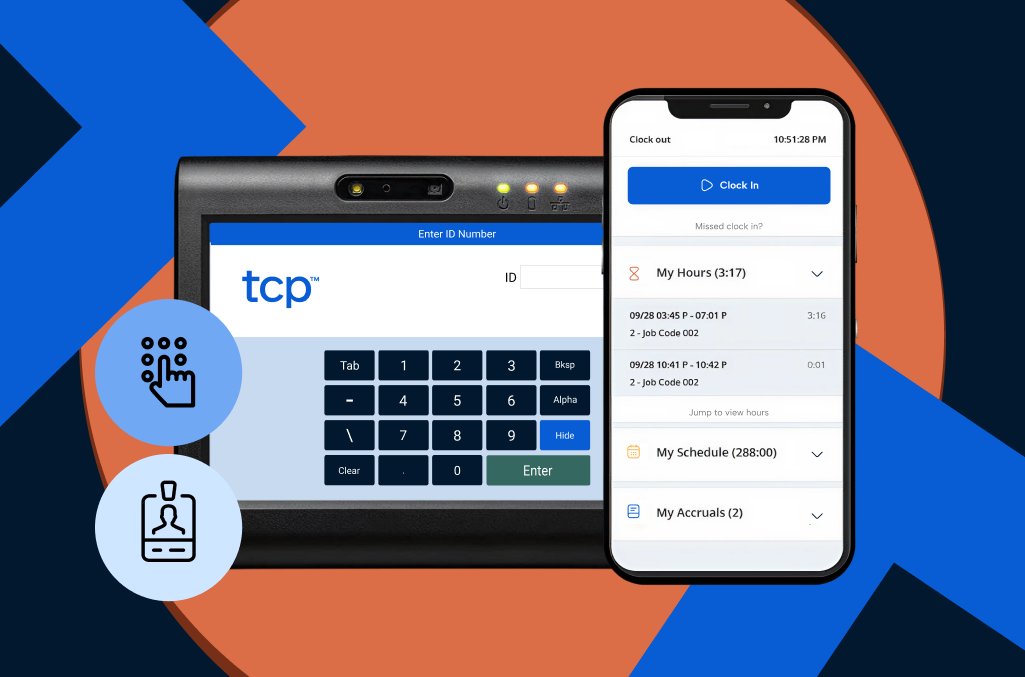
A wash-down line and a front office don’t need the same types of clocks. Sealed, industrial-rated time clock terminals, badge readers, tablets, mobile, and biometric options each fit a different environment. Standardizing on one device type usually means picking the wrong one for half the plant.
3. Automate the overtime offer order
If a contract defines who gets offered overtime first, that rule should apply automatically. Depending on a supervisor to remember the order during a 5:45 a.m. callout is how grievances start.
4. Keep the rules consistent across every plant
Every plant can keep its own contract and process. What should stay consistent is how time and pay data get recorded and reported, so corporate can compare one shift, or one plant, to another.
5. Connect schedule changes to the time record
A callout, a holdover, or a floater moving to another line should update the time record on its own. Relying on a supervisor to remember to tell the next shift is where handoffs break down.
6. Test new pay rules before they go live
A new differential, a new contract cycle, or a new line coming online is when pay rule mistakes happen. Test the configuration before the first shift runs under it.
Why manual time tracking falls short on the plant floor
Spreadsheets, whiteboards, and shift notes work until someone has to reconstruct what happened three days later. Corrections made from memory leave room for error, and errors that reach payroll turn into disputes or a documented pattern that supports a wage claim.
Manufacturing already carries above-average injury and grievance rates. A time tracking process built on memory and handoffs adds risk in a place that can least absorb it.
Common questions about time tracking in manufacturing
Why don’t timecards match payroll on a union floor?
A CBA sets how overtime gets offered, how seniority governs assignment, and what premiums apply. When a time tracking process doesn’t apply those rules consistently, someone corrects the timecard by hand to match the contract, and mismatches follow.
How is overtime calculated when shift differentials are involved?
Overtime pays at 1.5 times the regular rate, and the regular rate has to include differentials and non-discretionary bonuses. That means the regular rate can change per employee, per pay period, depending on which shift and which bonus applied.
Can a time clock survive a wash-down line or a dusty shop floor?
Sealed, industrial-rated clocks with interchangeable authentication options are built for that kind of environment, so a plant doesn’t need to replace an entire terminal every time one area proves too rough for it.
What happens to punches if a clock loses connection?
A well-built time clock keeps recording offline and syncs once it reconnects. Without that, a lost connection during a shift change turns into hundreds of missing punches and a manual rebuild.
If a shift schedule barely changes, is time tracking still the priority?
The published schedule might barely change week to week. The staffing reality on the floor changes daily with callouts, overtime, and reassignments, and that’s what the time record has to keep up with.
Where this leaves manufacturing time tracking
Accurate time tracking is what makes the rest of a plant’s numbers trustworthy: the labor cost per unit, the overtime percentage, and the paycheck that matches the real hours someone worked. Getting it wrong shows up in grievances, in wage claims, and in a labor variance nobody can explain.
Investing in your time tracking procedure, whether that’s through operations or software, is investing in the health of your manufacturing organization.
TCP Software’s employee scheduling and time and attendance solutions have the flexibility and scalability to suit your business and your employees, now and as you grow.
From TimeClock Plus, which automates even the most complex payroll calculations and leave management requests, to Humanity Schedule for dynamic employee scheduling that saves you time and money, we have everything you need to meet your organization’s needs, no matter how unique. Plus, with Aladtec, we offer 24/7 public safety scheduling solutions for your hometown heroes.
Ready to learn how TCP Software takes the pain out of employee scheduling and time tracking? Speak with an expert today.




 Link copied!


